به اطلاع میرسانیم که ارسال سفارشات از سایت اینترنتی تکسان پسکرایه میباشد. لطفاً در هنگام ثبت سفارش به این نکته توجه فرمایید.

Veneers vs. Composite Bonding: Which Is Right for Your Smile?

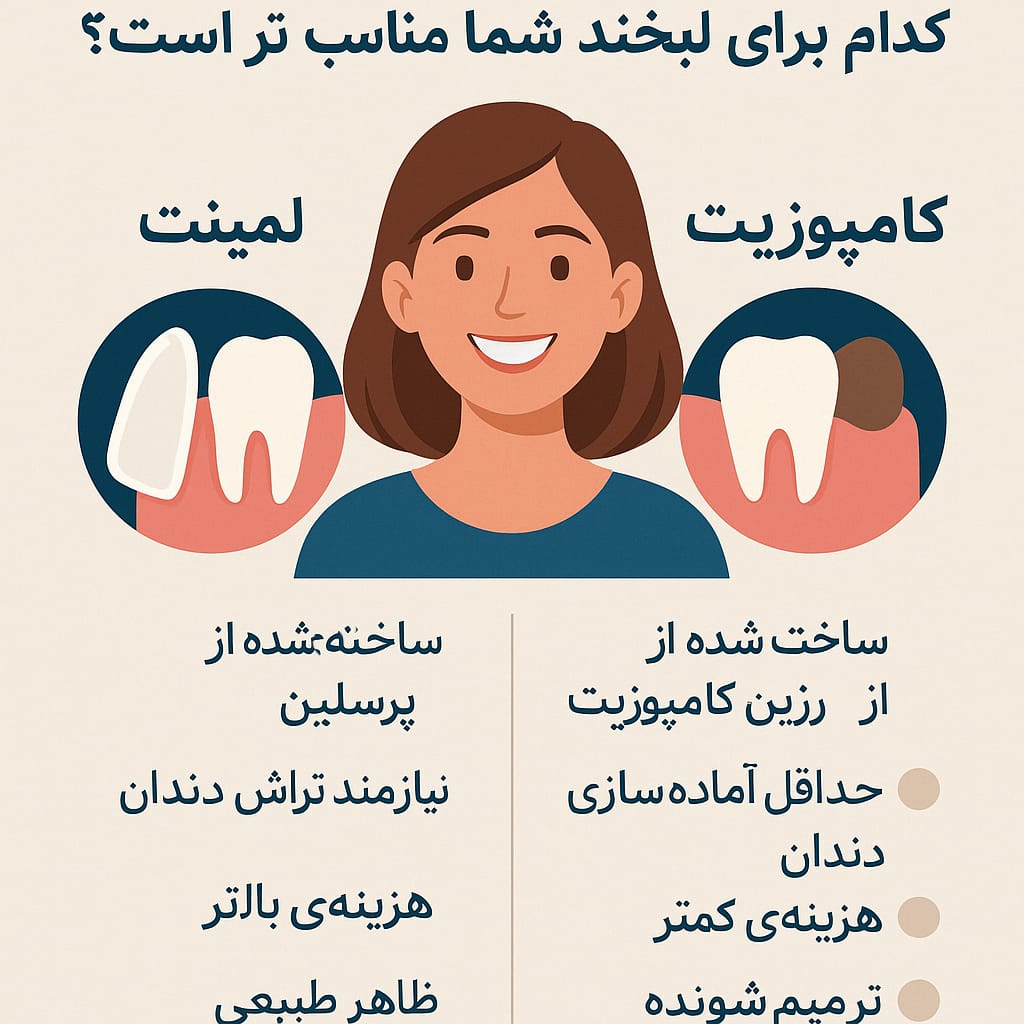
Veneers vs. Composite Bonding: Which Is Right for Your Smile?
Veneers vs. composite: in today's world, a beautiful smile is one of the most important sources of self-confidence. To improve their smile, many people turn to cosmetic dental treatments such as dental veneers and composite bonding . But what is the Veneers vs. Composite ? Which one lasts longer? Which costs less? In this comprehensive article, we take a thorough look at the difference between dental veneers and composite so you can make an informed decision.
What Are Dental Veneers?
dental veneers A veneer is a thin layer of porcelain ceramic or sometimes composite resin that is bonded to the front surface of the tooth. This method is used to cover cosmetic flaws such as:
- Severe tooth discoloration
- Fractures or chipping
- Gaps between teeth (diastema)
- Slightly irregular tooth shape
.
Advantages of Dental Veneers:
- Natural, glossy appearance: Looks like a natural tooth.
- High stain resistance: Porcelain does not stain.
- Long-lasting: 10 to 15 years (with proper care).
- Extensive changes: Can completely change the shape, color and size of a tooth.
Disadvantages of Veneers:
- Tooth preparation: Requires removing a layer of enamel (irreversible).
- High cost: Usually more expensive than composite.
- Longer treatment time: 2 to 3 visits.
What Is Composite Bonding?
Composite veneer is made of tooth-colored resin material and is shaped directly on the tooth by the dentist. This method is used to correct minor to moderate flaws.
Advantages of Composite Bonding:
- No or minimal tooth preparation: Preserves the natural tooth structure.
- Affordable cost: Cheaper than veneers.
- Single-visit treatment: Quick and immediate.
- Repairable: Easily repaired if damaged.
Disadvantages of Composite:
- Less durable: 5 to 7 years.
- Prone to staining: May discolor with tea, coffee or smoking.
- Less natural appearance: Compared with ceramic veneers.
Comparison Table: Dental Veneers vs. Composite
| Feature | Dental Veneers (Porcelain) | composite bonding |
|---|---|---|
| Material | porcelain ceramic | Composite Resin |
| Durability | 10–15 years | 5–7 years |
| Cost | High (3–6 million Toman per tooth*) | Moderate (1.5–3 million Toman per tooth*) |
| Treatment Time | 2–3 visits | 1 visit |
| Tooth preparation | Required (0.5–1 mm) | Little or no preparation |
| Stain resistance | Very high | Moderate |
| Final Appearance | Very natural and glossy | Natural, but less so than veneers |
| Repairable | Difficult (requires full replacement) | Easy |
*Prices are approximate and based on the year 1404 (Persian calendar). Contact a clinic for exact pricing.
Veneers vs. Composite: The Treatment Steps
Dental Veneer Steps:
- Consultation and impressions
- Tooth preparation
- Final impression
- Veneer fabrication in the lab (7–10 days)
- Bonding the veneers
Composite Bonding Steps:
- Consultation and preparing the tooth surface
- Applying the composite layer by layer
- Shaping and polishing in the same visit
Which One Is Right for You?
- Choose veneers if:
- You want permanent, professional results .
- You have severe discoloration or significant irregularities.
- You're willing to make a long-term investment.
- Choose composite if:
- You're on a limited budget.
- You want quick results.
- You'd rather not have your teeth prepared.
- It's suitable for temporary or minor corrections.
Aftercare for Veneers and Composite
Both treatments need care:
✅ Do:
- Brush regularly
- Floss daily
- See your dentist regularly
❌ Don't:
- Chew ice, fingernails or hard objects
- Drinking too many staining drinks (without a straw)
Conclusion: Veneers or Composite?
The main difference between veneers and composite lies in material, durability, cost and invasiveness . If you're looking for a luxurious, long-lasting look , ceramic veneers are the best option. But if speed, lower cost and preserving your natural teeth are your priorities, composite bonding is a smart choice.
Final Recommendation: Be sure to consult an experienced cosmetic dentist . They will assess your teeth and recommend the best option.